
No products in the cart.
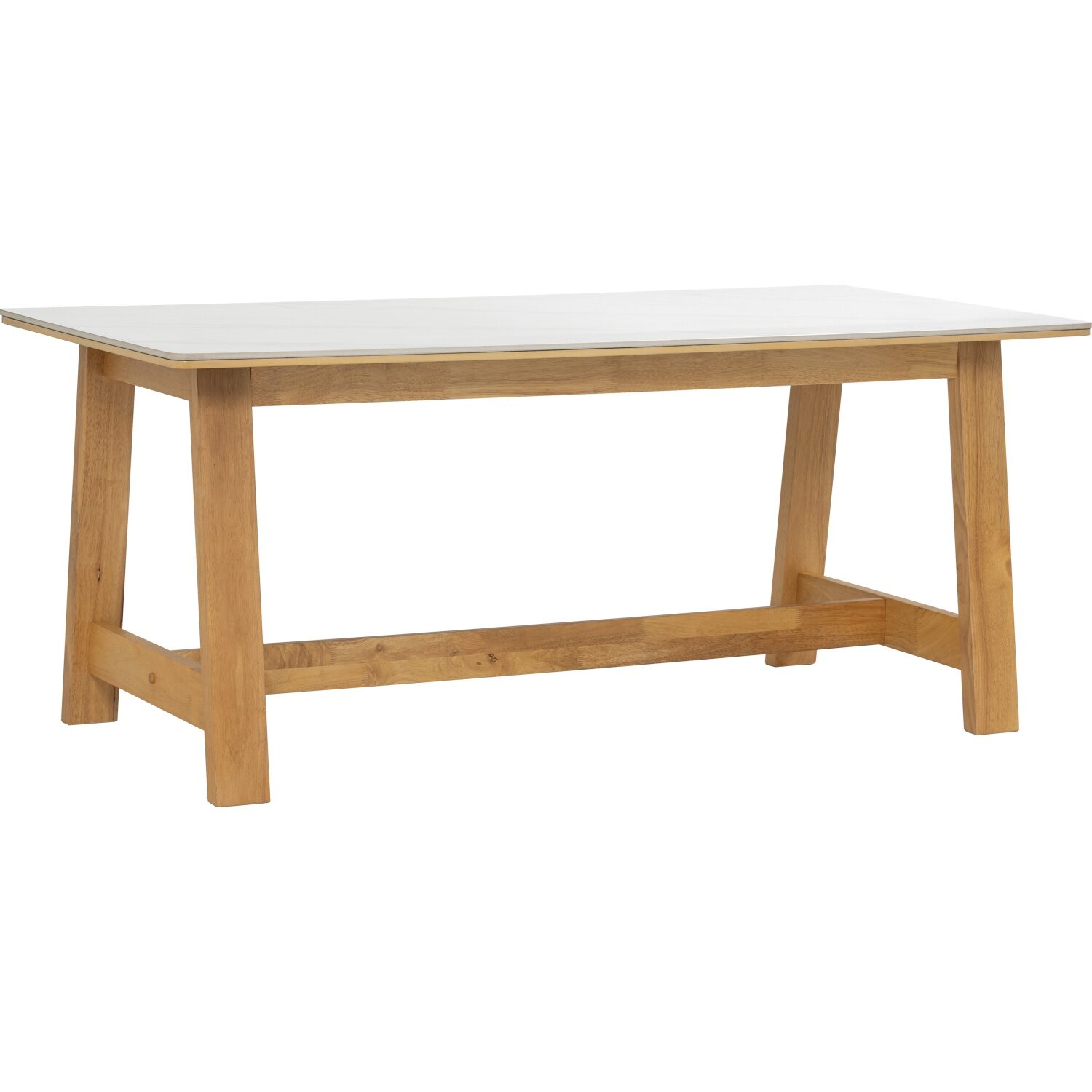
Sintered Stone Dining Table: How to Choose One
A sintered stone dining table pairs a manufactured stone surface with a dining-table base; choose its shape and footprint around the people you seat and the room you have. The right choice gives you a practical eating surface without making a condo dining area feel crowded, and helps you compare finish and base materials before ordering.
1. Decide what you want from the surface
Sintered stone is an engineered surface, often selected for its stone-like appearance and everyday practicality. It is not the same thing as a slab of natural marble, even when the pattern is designed to look like marble. In our range, the tops include glossy Pandora Marble and glossy White Marble finishes.
For a bold, darker pattern with a timber-toned base, the Monora Ø120cm Round Dining Table pairs a glossy Pandora Marble top with a Walnut veneer finish and pedestal base. If you prefer a lighter marble look, the Trenton 140 × 80 cm Dining Table has a glossy White Marble top and Natural base.
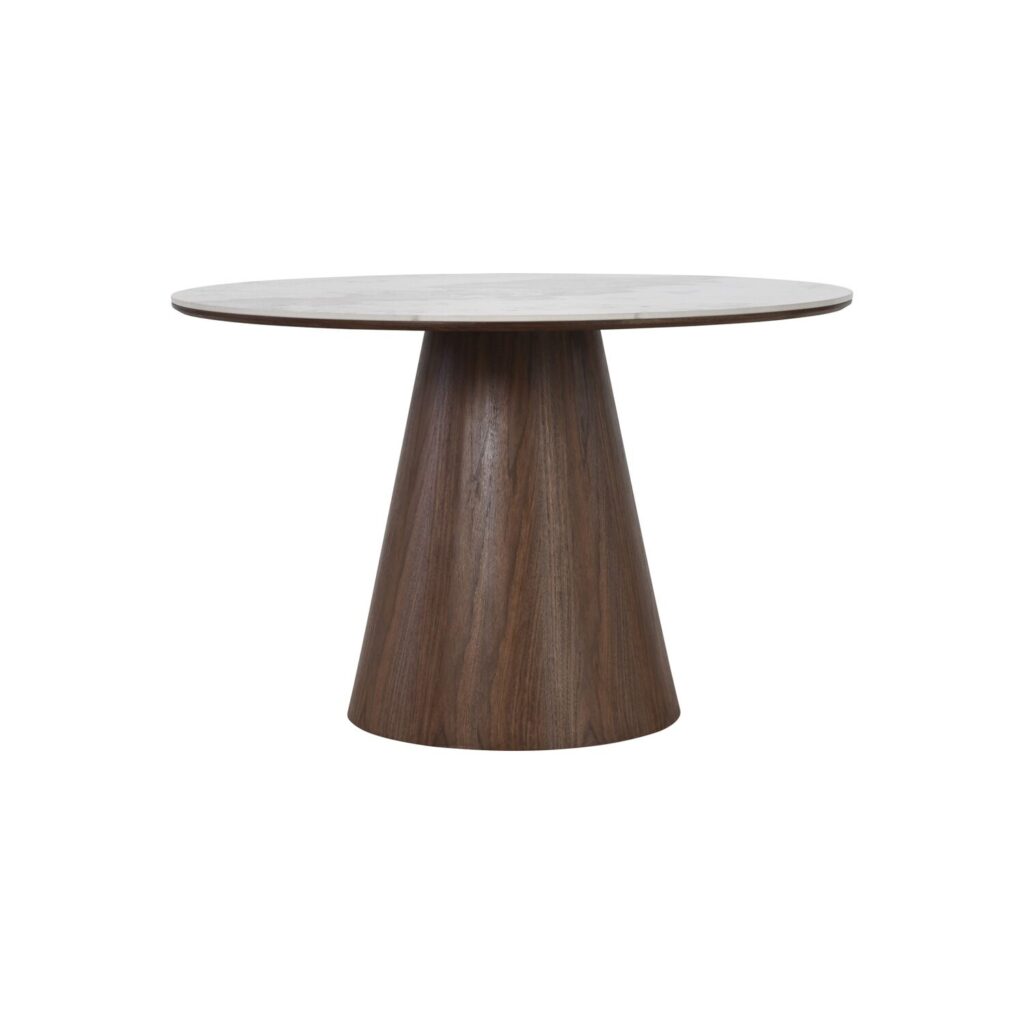
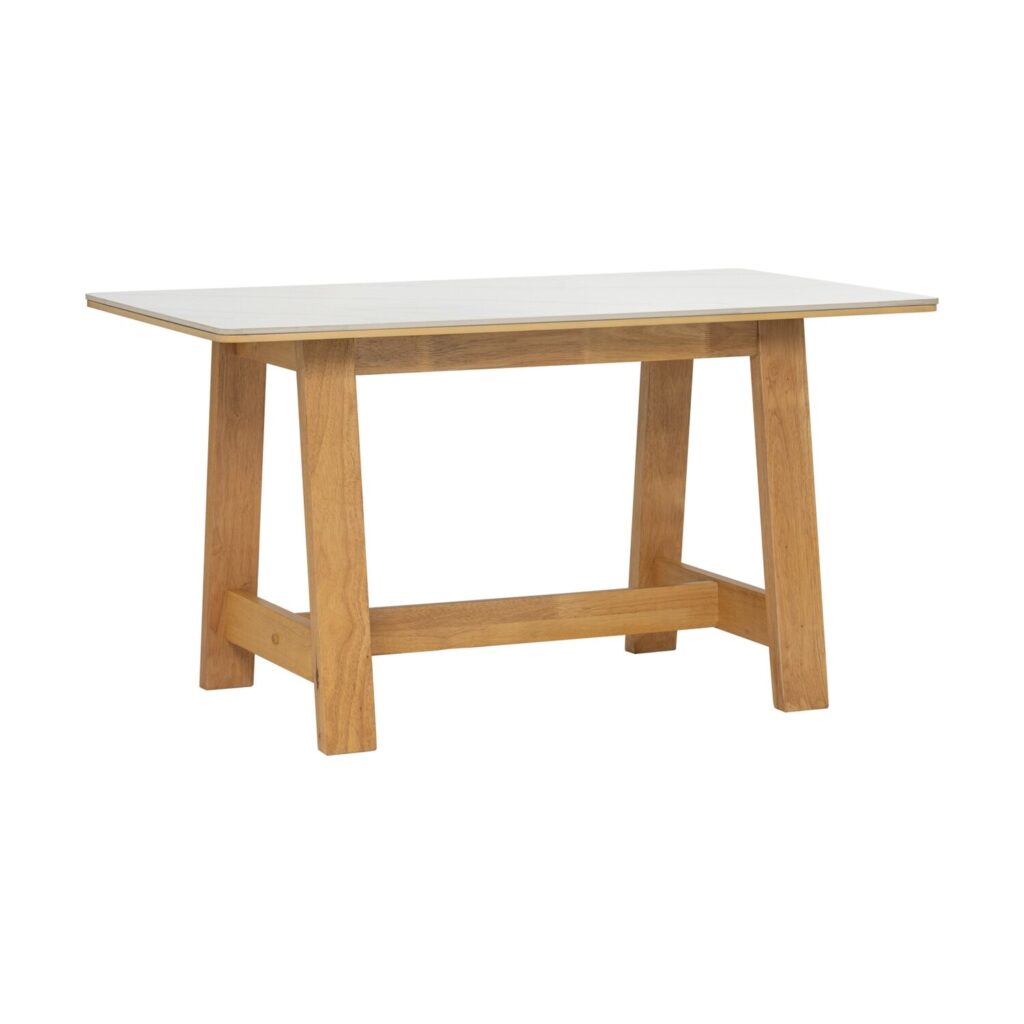
Look at the full tabletop image and its listed finish, rather than relying on the word “marble” alone. A glossy surface reflects more light, while a matt surface has a softer appearance; pick the look that works with your room and how you want the table to sit alongside your chairs and flooring.
2. Match the footprint to your room
Measure the dining area before comparing seat counts. As general planning guidance, allow about 90 cm (35 in) between the table edge and a wall or obstruction where people need to pull out chairs and move around. That means adding roughly 180 cm (71 in) to each table dimension when checking the overall space needed.
These examples show how the available shapes and sizes compare. Dimensions are tabletop length and width, or diameter for the round table; height is listed separately.
| Table | Tabletop size | Height | Stated seating |
|---|---|---|---|
| Monora round | Ø120 cm (about 47 in diameter) | 75 cm (about 29.5 in) | Up to 4 |
| Trenton compact rectangular | 140 × 80 cm (about 55 × 31.5 in) | 76 cm (about 30 in) | Up to 4 |
| Trenton large rectangular | 180 × 90 cm (about 71 × 35.5 in) | 76 cm (about 30 in) | 6 to 8 |
| Vigora large rectangular | 180 × 90 cm (about 71 × 35.5 in) | 76 cm (about 30 in) | Up to 8 |
The 120 cm round and 140 × 80 cm rectangular options both seat up to four, but their outlines use the room differently. A round top has no corners to work around; a rectangular one gives you a defined long side that can line up with a wall or open-plan area. Check the guide to dining table height if you are also comparing a table with chairs you already own.
3. Choose seating for your regular routine
Base your decision on the number of people who sit down for an ordinary meal, not only the largest gathering you host once in a while. A table that is too large takes up daily circulation space; one that is too small can leave little room for shared dishes and serving plates.
For a compact dining area or a household of up to four, the Monora round table or the 140 cm Trenton offers a more manageable footprint. Choose between them by the shape that best fits your room: round for easier movement around the edge, rectangular when you want a clear line along a wall or room boundary.
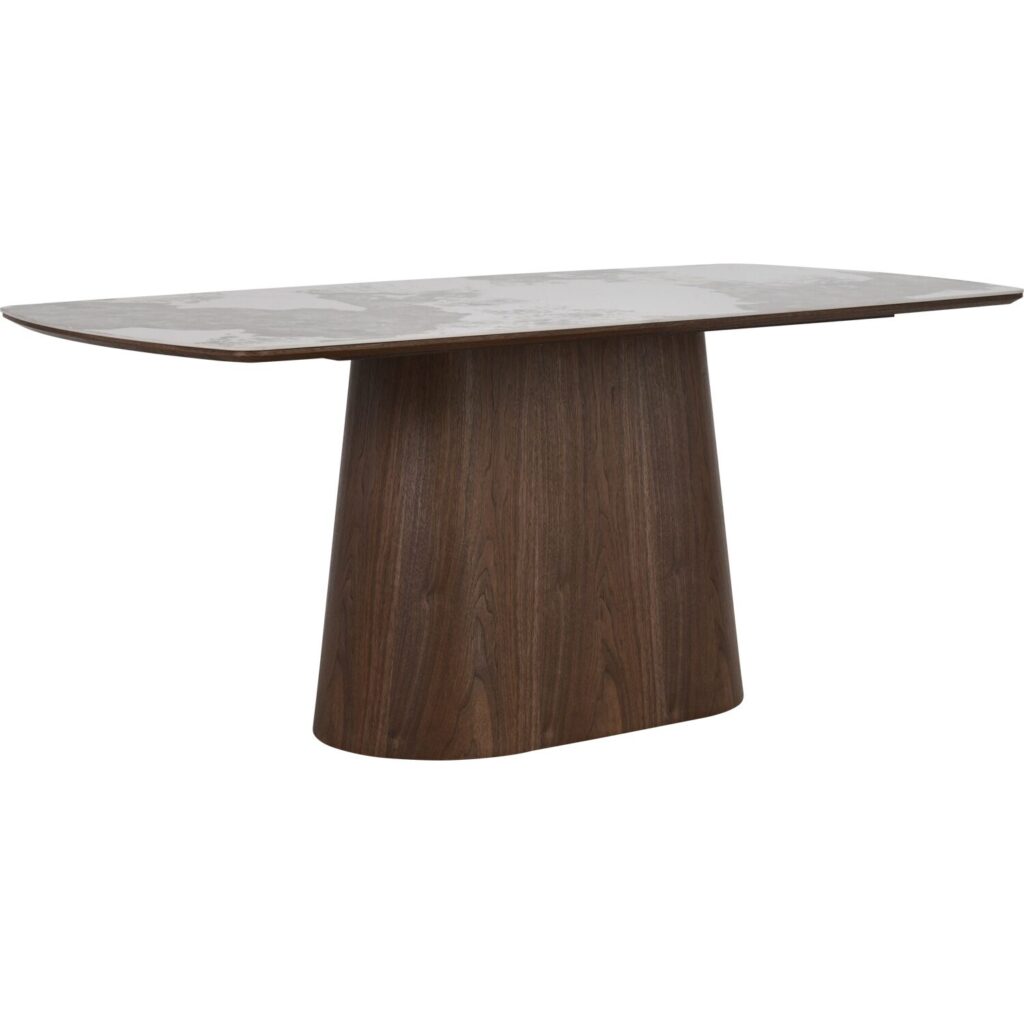
For regular family meals with more diners, the Trenton 180 × 90 cm Dining Table seats six to eight and has a glossy White Marble top with Natural Malaysian Oak legs. The Vigora 180 × 90 cm Dining Table also seats up to eight, with a glossy Pandora Marble top and Walnut base. Compare the listed seat count with your chair width and the space people need to sit comfortably.
4. Consider the base and the room’s layout
A pedestal base keeps the supports in a central area, which can make it easier to position chairs around a round tabletop. Legged designs have a more familiar dining-table outline, but check where the legs fall in relation to the chairs you plan to use. In either case, measure the table together with its chairs pulled out—not just the tabletop—before deciding it fits.
Next, compare the base finish with the other large pieces in the room. Walnut tones bring a deeper contrast against a light top, while a Natural finish gives the table a lighter timber look. If the dining area is part of an open-plan living space, repeat one of those tones in a nearby cabinet or other furniture to make the different zones feel connected.
5. Plan for everyday care
For the two 180 cm options, the product details describe the sintered stone tops as resistant to heat, moisture and scratches. That makes them practical candidates for regular meals, but resistance is not the same as being immune to damage. Use a chopping board for food preparation, avoid dragging rough objects across the surface and take care around the tabletop edges.
Wipe spills and food residue after meals, and use a soft cloth for routine cleaning. Follow the product care guidance for the specific table, especially if you are choosing a special cleaner; avoid assuming that a marble-look finish needs the same care as natural marble. Keeping the table clear and dry after use also helps preserve the appearance of the top and base.
Once your measurements, seating needs and preferred finish are clear, browse our dining table range to compare shapes and materials.
Which table should you choose?
- Choose a 120 cm round table if you want seating for up to four and prefer a central pedestal.
- Choose the 140 × 80 cm rectangular option if you need four seats and a long, room-aligned shape.
- Choose the 180 × 90 cm Trenton for six to eight seats with a light White Marble and Natural Oak look.
- Choose the 180 × 90 cm Vigora for up to eight and a darker Walnut-and-Pandora Marble combination.
Browse Kedai Perabot’s dining tables to compare the options for your home.
Frequently Asked Questions
Is sintered stone the same as natural marble?
No, sintered stone is an engineered surface, while natural marble is quarried stone. A marble-look pattern describes the appearance, not the material.
Can a sintered stone tabletop chip?
Yes, a hard impact can chip an edge even when the tabletop is designed for everyday use. Take care when moving heavy or hard objects near the edges.
Can I put a hot pan directly on a sintered stone table?
Use a trivet for hot cookware. Some product descriptions state heat resistance, but a trivet is a sensible way to protect the table and avoid damage from sudden temperature changes.
Does a sintered stone dining table need special cleaning products?
No, routine cleaning can usually be done with a soft cloth. Check the care guidance for your particular table before using specialist cleaners.
More articles
 Buying guidesTableware Set: How to Build a Useful Set for Your Home
 Buying guidesSettee Sofa: How to Choose the Right Fit for Your Home
 Buying guidesWood Dining Table: How to Choose the Right One
 Buying guidesArea Rugs: How to Choose the Right Size and Material
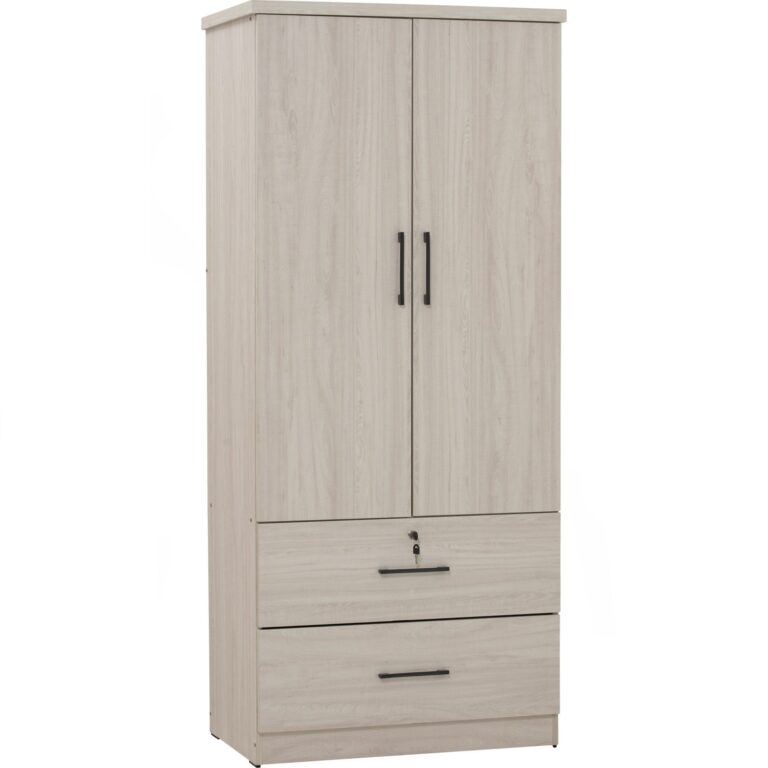 Buying guides2 Door Wardrobe: How to Choose the Right Fit
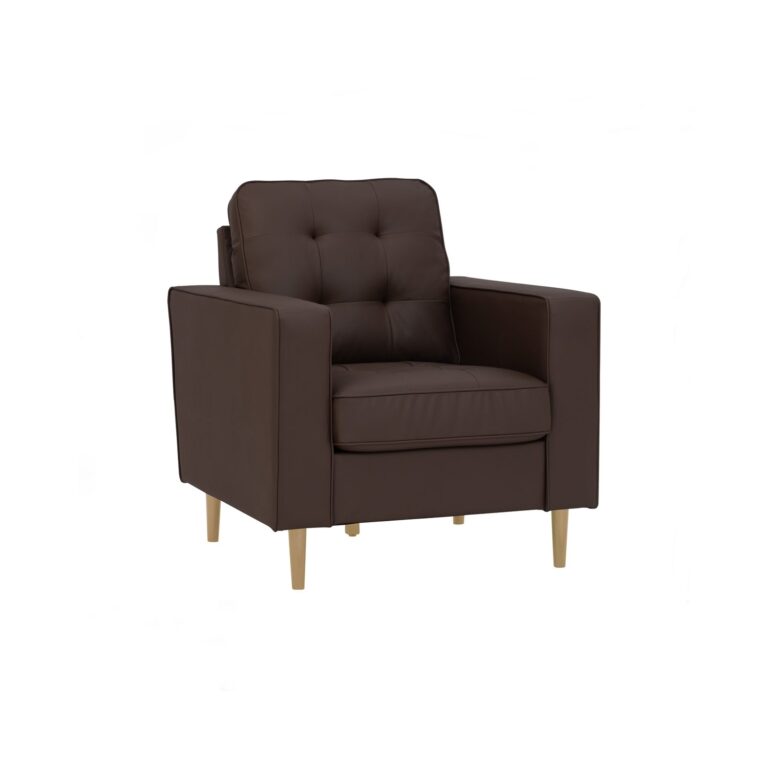 Buying guidesSingle Seat Sofa: How to Choose the Right Fit
Related posts

A useful tableware set covers the meals you serve most, with plate sizes and pieces that suit your diners, storage and table. Continue reading
A settee sofa is generally another name for a sofa; compare room fit, seating style and materials before choosing one for your home. Continue reading
A wood dining table may be solid timber or a veneer-and-board combination; compare construction, size and room clearance before choosing. Continue reading

Area rugs range from compact 60 × 120 cm mats to broad 200 × 300 cm floor coverings; size yours around the furniture zone. Continue reading
An 80 × 48 × 183 cm 2 door wardrobe is a compact option; compare your room, storage needs and access before choosing a size. Continue reading